
A-Z Affiliate Guide to Promoting Nutra Offers
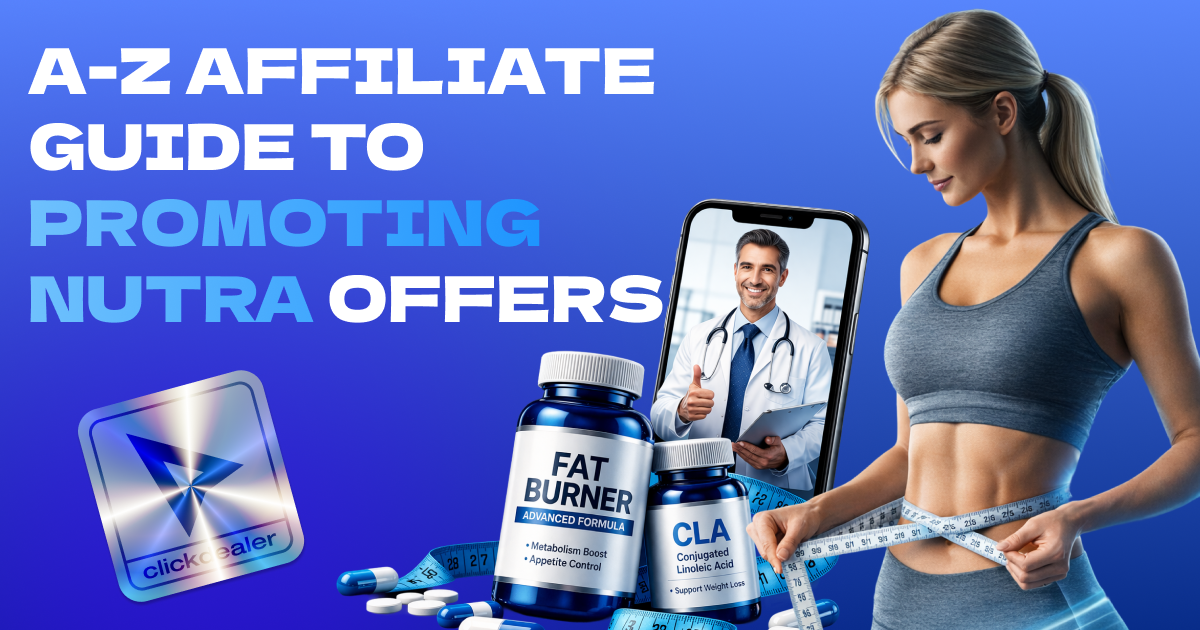
Every affiliate vertical that has been around as long as nutra has certain misconceptions attached to it simply due to the fact of its longevity, so let’s get this out of the way: affiliates around the world are making millions running nutra offers in 2026.
The vertical is not calcified or oversaturated, but the playbook has changed. What worked with unoptimized funnels and recycled creatives a few years ago is now filtered out either by platforms or by users who’ve seen the same angles thousands of times.
The fundamentals are still solid. People want quick solutions to personal problems, and they’re willing to pay for them. The market keeps coming up with new products that generate media hype and demand. New affiliates enter the vertical and make profit promoting these products. Are you looking to join them? Then you are in the right place.
What is the Nutra Vertical?
The term “nutra” gets thrown around a lot, often as shorthand for anything health-related. In affiliate marketing, it has a more specific meaning.
Nutra refers to products sold as health or lifestyle improvements that don’t require a prescription. The category is somewhere between food, supplements, and cosmetics; close enough to wellness in terms of legitimacy, but flexible enough to be marketed aggressively.
In practical terms, this includes:
- Weight loss supplements
- Skincare and anti-aging products
- Hair loss treatments
- Testosterone boosters and men’s health products
- Sleep aids, nootropics, and general wellness supplements
- Joint pain and mobility products
What ties them together is the positioning. Nutra removes barriers like doctor’s appointments and prescriptions between the user and the problem they are trying to solve. The solution is a quick order away, and that’s what makes it work so well in affiliate marketing.
Nutra Payment Models
Before getting into niches and traffic, it’s worth understanding how revenue is generated. Nutra’s real margins are often found deeper in the funnel than upfront payouts.
- Standard CPS
Users pay upfront, and you get paid per purchase. This is common in Tier 1 markets where trust is higher and users are used to online payments. - Subscriptions/trials
The front-end conversion is just the start. Real profit comes from rebills and upsells, while refunds hurt margins exponentially more. - Cash on Delivery (COD)
Users submit their details and pay later, usually after a call center confirms the order. This helps conversions, but also introduces the approval rate bottleneck.
The main adjustment to make when measuring nutra performance is realizing that front-end performance isn’t the full picture. A campaign that looks profitable when you count leads can dip into the red once approvals, returns, and upsells are factored in.
Nutra Niches and Strategy
The main emotional drivers behind every nutra niche haven’t changed. What has changed is how aware users are, how platforms treat your ads, and how much competition you’re up against.
The basics still matter, but they are not enough to solely make a campaign profitable anymore. Sticking with decade-old strategies results in the kind of performance that turns new affiliates away from the vertical, and this section will provide you with a quick breakdown of key niches and present-day strategy tips for each of them.
Weight Loss
Weight loss is still one of the most scalable niches in nutra. The appeal is universal, the pain points are obvious, and the outcomes are easy to visualize. That combination makes it a consistent, but also highly saturated entry point.
The demand is solid year-round with a few predictable spikes throughout the year (New Year, summer). Using that to scale is the most basic tip to profit from running weight loss offers long-term.
Why it works
- Constant, global demand
- Strong emotional triggers (urgency, insecurity)
- Visual transformation is easy to communicate
Typical funnel
- Ad: transformation or curiosity hook
- Prelander: personal story or “secret method”
- Offer: urgency, testimonials, clear outcome
Current state of the niche
Users are no longer coming in blind. The rise of pharmaceutical weight loss (GLP-1 drugs) has changed expectations across the board, even if your offer isn’t medical.
- “Magic trick” angles perform weaker unless reframed
- Users respond better to mechanism-based explanations (metabolism, hormones, insulin)
- Extreme before/after still works, but needs context to feel believable
What works today:
- “Why you can’t lose weight after 30”
- “It’s not your diet, it’s your metabolism”
- Funnels that feel educational before selling
Skincare / Anti-aging
Skincare is research-heavy and reliant on unique angles. Users aren’t always looking for instant fixes. They’re looking for something that feels credible and different from what they’ve already tried.
This niche rewards better presentation and stronger storytelling. Compared to weight loss, the buying process is slightly more considered.
Why it works
- Ongoing demand rather than seasonal
- Strong appeal in Tier 1 markets
- Easier to position as premium
Typical funnel
- Ad: “why most creams fail”
- Prelander: educational + discovery angle
- Offer: ingredient-focused, credible
Current state of the niche
Users are significantly more informed than they used to be. They recognize ingredients, they’ve tried multiple products, and they’re used to seeing polished branding.
- Generic “miracle cream” messaging underperforms
- Ingredient specificity builds credibility
- Overly polished/branded ads often get ignored
What works today:
- UGC-style “routine” content
- Hooks like “I stopped using this and my skin improved”
- Angles that challenge existing habits rather than introduce something new
Men’s Health (testosterone, vitality, performance)
This niche retains relatively high conversion rates despite undergoing the least changes of all nutra niches over the past decade, largely because the messaging can be more direct and tied to identity. The decision-making process is faster compared to other niches.
It performs exceptionally well in COD markets, where faster conversion flows help drive leads.
Why it works
- Clear, high-impact benefits
- Strong emotional drivers
- Less comparison shopping
Typical funnel
- Ad: direct benefit hook
- Prelander: short explanation
- Offer: minimal friction, fast lead capture
Current state of the niche
Platform moderation has pushed this niche to evolve. What used to be said directly now often needs to be implied.
- Language is softer upfront (“energy,” “vitality”)
- Stronger claims further in the funnel
- Younger audiences are entering via “biohacking” angles
What works today:
- “Why men lose energy after 35”
- Daily routine/optimization angles
- Cleaner front-end, stronger backend messaging
Hair Loss
Hair loss is a steady niche that doesn’t rely on seasonal spikes. It tends to attract users who are already aware of their problem and actively looking for solutions.
Because many users have tried products before, trust becomes a central factor.
Why it works
- Deep personal impact
- Long-term problem means repeat purchase potential
- Works across a wide range of GEOs
Typical funnel
- Ad: relatable hook
- Prelander: personal journey
- Offer: testimonials, credibility
Current state of the niche
Awareness has increased significantly. Users now know about common treatments like minoxidil and transplants, which changes how they evaluate new offers.
- Skepticism is higher
- Prevention angles are gaining traction
- Younger users are entering earlier
What works today:
- “Early signs you’re losing hair (before it’s obvious)”
- Story-driven funnels over aggressive claims
- Positioning around maintenance, instead of just regrowth
General Health & Supplements (sleep, nootropics, immunity)
This category has shifted closer to mainstream wellness. It feels less like traditional affiliate marketing and more like a continuation of content users are already consuming.
The buying journey is usually less impulsive and more influenced by perceived credibility.
Why it works
- Broad audience appeal
- Easier compliance
- Strong fit for content-driven traffic
Typical funnel
- Ad: problem awareness
- Prelander: educational tone
- Offer: clean, brand-like
Current state of the niche
This space is heavily influenced by content platforms and creator ecosystems.
- Users discover products through content, not ads
- Hard-selling underperforms
- Competition includes established brands and influencers
What works today:
- “Why you still feel tired after 8 hours”
- Content-style funnels (article/video followed by recommendation)
- Soft positioning rather than aggressive claims
Pain Relief / Joint Health
This niche targets a more specific demographic, often older users dealing with chronic issues. It’s less volatile than trend-driven niches, and highly profitable when executed well.
Why it works
- Immediate, tangible pain point
- Stable demand
- Strong COD performance
Typical funnel
- Ad: clear relief-focused message
- Pre-lander: simple explanation
- Offer: testimonials, guarantees
Current state of the niche
The audience has become more digitally comfortable, but also more cautious.
- More users are willing to buy online
- Purchasing behavior is more informed
- Trust matters more than ever
What works today:
- Video-based proof (movement, flexibility)
- Simple, believable messaging
- Localized funnels that feel familiar
Top Traffic Sources for Nutra Offers
Matching your traffic source to a suitable niche is non-negotiable in nutra. The same offer can perform completely differently depending on whether the user clicked a push notification, a native ad, or a TikTok video.
Understanding that “pre-click mindset” is what allows you to build out actual campaigns instead of just copying funnels across sources and praying something works.
- Push & Pop traffic
Cheap and scalable, but interrupt-driven. Strong hooks and aggressive angles tend to perform best, especially for COD funnels. - Native advertising
Built for storytelling. This is where advertorial funnels perform best, particularly for weight loss and skincare. - Social (Facebook, TikTok)
Massive reach with stricter rules. Success usually comes from softer angles and cleaner funnels. - Search traffic
High intent but expensive. Works best with review-style funnels and branded queries. - SEO / content
Slower to build, but more stable. Strong fit for supplements and evergreen niches.
How to Design a Nutra Funnel
Most profitable nutra campaigns rely on a simple but effective structure:
Ad – Prelander – Offer page – Checkout / Lead form
The prelander plays a critical role. It gives you space to fully present your angle and the product’s USPs, giving users a reason to believe before they’re asked to buy. Without that step, cold traffic often doesn’t convert no matter how strong the offer looks, especially considering how much information nutra users require to make a decision in 2026.
Here is how you can ensure that your prelander helps your campaign instead of becoming an extra opportunity for the user to bounce:
- Start with a hook that introduces a specific problem or contradiction, not the product.
- Make the first screen feel like content, so users don’t feel like they’ve “clicked into an ad.”
- Focus on one clear mechanism or explanation instead of listing multiple benefits.
- Provide a short and clear explanation of what the user needs to do to receive the product.
- Add testimonials and credentials early (first scroll early) to reduce skepticism before the pitch.
GEO Strategy
You’ll notice this breakdown sticks to tiers rather than listing specific countries, and that’s intentional. For individual GEOS, costs change, regulations shift, and call center quality varies, while tier-based behavior stays relatively consistent. These tiers aren’t rigid categories, as many markets shift between them depending on platform costs, regulations, and consumer trends.
Tier 1 (US, UK, CA, AU)
These are high-value markets with strong purchasing power, but they come with stricter expectations.
- Higher payouts, but also higher CPAs
- Users are more skeptical and comparison-driven
- Compliance is tighter, especially on social platforms
Cleaner design, clearer explanations, and stronger trust signals tend to outperform aggressive, hype-driven approaches. Subscription models are also more common, which shifts the focus toward lifetime value rather than immediate profit.
Tier 2 (Eastern Europe, LATAM, parts of Asia)
This is the most popular tier among affiliates because of the balanced costs, solid volume, and more flexibility in ad creative design.
- Moderate traffic costs
- Strong COD performance
- Users are more responsive to emotional angles
Funnels here can be more direct and benefit-based, but still need credibility indicators. Overpolished funnels can underperform compared to simpler, more relatable creatives. Localization makes a noticeable difference.
Tier 3 (Africa, SEA)
These GEOs are high-volume and cost-efficient, but require a different approach.
- Very low traffic costs
- High volume potential
- Lower purchasing power
COD is the main model here due to lower trust in online payments. Funnels need to be simple, clear, and fast-loading. Complex storytelling or long-form advertorials can bounce users. Clear and direct messaging performs better.
Metrics to Watch in Nutra
It’s easy to get distracted by surface-level metrics. In nutra, backend performance is just as important.
- CTR → how well your creative works
- CVR → how well your funnel converts
- CPA → your acquisition cost
For COD:
- Approval rate
- Cost per approved order
For subscriptions:
- Refund rate
- Lifetime value
Mistakes that Break Nutra Campaigns
Switching offers too quickly
Nutra campaigns rarely work on the first try. It’s a long game of angle and funnel adjustments with high reward, so killing offers after barely getting any data is not a good idea even in Tier 3.
Focusing only on the ad and not the funnel
A strong creative can generate clicks, but it won’t compensate for a weak funnel. Many campaigns fail not because the ad is bad, but because the prelander or landing page clashes with the rest of the funnel in terms of message or tone.
Using the same angle across every traffic source
An angle that works on push traffic can fail completely on native or social. Each source comes with different user behavior, and forcing the same approach across all of them is ROI poison.
Burning through angles instead of refining them
Jumping from one idea to another without improving what already shows potential leads to inconsistent results. Same as with offers, give it a few rounds of optimization.
Trying to outsmart the user
Creatives that feel salesy or disconnected from the user’s actual problem usually underperform. The closer your angle is to what the user already believes, the higher your CR.
In Conclusion
Nutra in 2026 is still one of the most stable and dependable affiliate verticals. It requires more data to optimize effectively than most other verticals, and coming up with fresh creatives means working around decades of overused angles. However, those who make it past those entry barriers are running offers that are stable, scale well, and offer some of the highest payouts affiliate marketing has to offer.
Where can you find these offers? Get a ClickDealer account, and we will help you with that.